
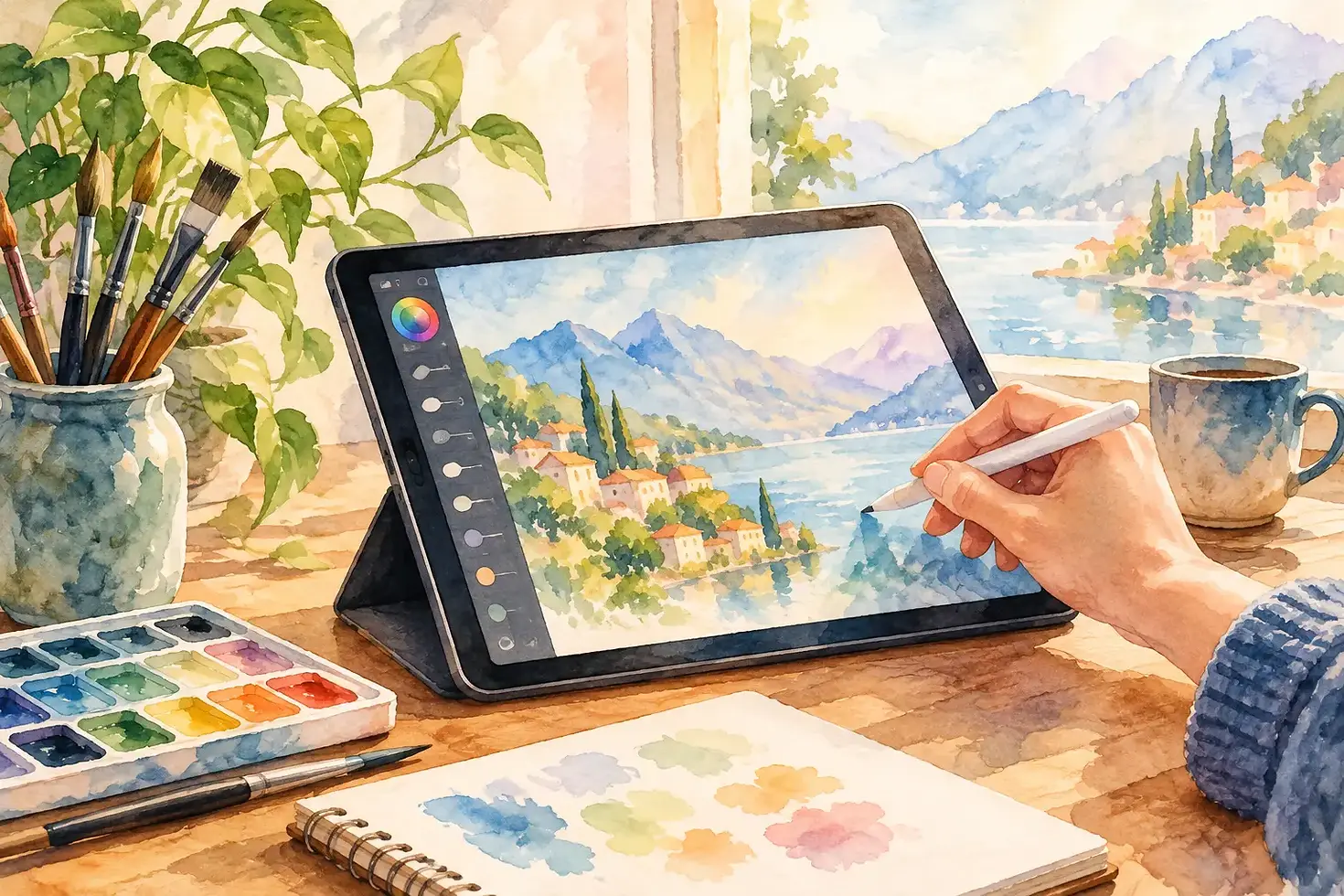
Starting Digital Painting Lessons the Smart Way
A student opens a drawing app, chooses a dramatic brush, and fills the screen with color. The excitement is real, but so is the frustration that can follow when the painting feels flat or the tools feel confusing. Starting digital painting lessons gives young artists a better beginning: one that turns curiosity into visible skills, creative confidence, and artwork they are proud to share.
For parents, digital art can look like screen time at first glance. With professional instruction, however, it becomes purposeful studio practice. Students learn to observe, plan, revise, and make artistic decisions while building fluency with the tools used in illustration, animation, design, and portfolio work.
Why Digital Painting Needs a Strong Foundation
Digital painting is not simply traditional painting on a tablet. It has its own workflow, tools, and habits. Layers can be rearranged, colors can be adjusted, and a brush can imitate watercolor, pencil, ink, or textured paint. Those possibilities are exciting, but too many options can distract beginners from the fundamentals that make art convincing.
A well-structured lesson begins with drawing. Before students worry about special effects, they need to understand shape, proportion, value, perspective, and composition. A polished brush will not solve an uncertain drawing. When students can simplify a face into clear forms, place an object in space, or make a light source believable, digital tools become far more useful.
Color is another essential area. Young artists often choose colors based on what looks bright or familiar. Digital painting lessons help them recognize how warm and cool colors affect mood, how value creates depth, and how limited palettes can make a painting feel more unified. These are transferable skills that support both digital and traditional artwork.
Starting Digital Painting Lessons With the Right Tools
Families do not need to purchase every device or software program before a student has tried the medium. A pressure-sensitive tablet and stylus are helpful because they allow lines and brush strokes to respond more naturally to the artist's hand. However, the best setup depends on the student's age, goals, and level of commitment.
Younger beginners may do well with a straightforward drawing app and a smaller set of tools. The goal is to reduce technical distractions and build the habit of completing simple projects. Teens interested in illustration, graphic design, animation, or portfolio development may benefit from more advanced software and a larger workspace, especially as they begin working with layers, custom brushes, and higher-resolution files.
The device matters less than the instruction behind it. Students should learn what each tool is for, when to use it, and when not to use it. For example, undo is valuable for correcting an accidental mark, but relying on it after every stroke can prevent students from developing confident observation and decision-making.
A beginner should not start with every brush
One common mistake is treating an art app like a toy box. A student may download dozens of brushes, try each one for a few seconds, and finish without understanding how any of them can support a painting. Beginning with a pencil brush, an opaque paint brush, a soft blending brush, and an eraser is often enough.
As skills grow, students can explore texture, edge control, and brush settings with purpose. This approach makes progress easier to see. It also teaches an important professional habit: artists select tools to serve an idea, not simply because the tools are available.
What Students Should Learn First
The strongest beginner curriculum moves from simple exercises to more independent projects. At Expression8 Art Academy, structured instruction helps students build one skill on top of another rather than jumping between unrelated tutorials.
Early digital painting lessons should focus on line control and simple forms. Students may sketch everyday objects, animals, food, or imaginative characters while learning how to use layers and basic selections. These projects feel approachable, yet they reveal crucial lessons about observation, proportion, and clean shapes.
Once students are comfortable with sketching, they can begin studying light and shadow. A basic sphere, cube, or cup may not seem as exciting as a fantasy scene, but these studies teach artists why objects look three-dimensional. Students learn to separate light, midtone, shadow, reflected light, and cast shadow. Later, they can apply the same ideas to a character, landscape, or still life.
Color studies naturally follow. Rather than asking students to memorize complex color theory, an instructor can guide them through practical questions: Is the sunlight warm or cool? Which colors should be muted so the focal point stands out? How can a dark background make a bright subject feel more dramatic? Students begin to see that color is a tool for storytelling, not just decoration.
Structure Builds Confidence and Independence
Many children enjoy creating art but hesitate when asked, “What should I draw?” A guided course helps solve this problem by giving students clear challenges without limiting their imagination. They learn a repeatable process: gather references, make small thumbnail sketches, choose a composition, create a clean drawing, block in major colors, develop light and detail, then evaluate the final piece.
This process is especially valuable for teens. Portfolio-ready work rarely appears in one quick session. Students need patience to revise a pose, adjust a background, improve a focal point, or repaint an area that is not yet working. Professional feedback shows them how to identify the next improvement instead of abandoning a piece too soon.
Small-group instruction adds another benefit. Students see how classmates approach the same assignment differently, while still receiving individual guidance. A child who is naturally imaginative may need support with perspective. Another student with strong drawing skills may need encouragement to take creative risks. Effective teaching meets both needs without treating every student as if they are at the same stage.
Balancing Creativity With Technical Progress
Parents sometimes worry that structured art instruction will make a child less creative. In practice, structure often gives students more freedom. When they understand how to mix a convincing skin tone, draw a turn in a road, or create depth in a room, they can bring more of their own ideas to life.
The balance matters. Lessons should not become a series of copied images with no personal choice. At the same time, complete freedom without guidance can leave students repeating the same habits. A thoughtful digital painting program combines skill-building exercises with projects that invite personal themes, favorite subjects, and original storytelling.
For younger students, that might mean designing a whimsical animal in its habitat. For middle school students, it may involve creating a game-inspired environment while applying perspective and lighting. For high school students, original concept development can support AP Art preparation or a college admissions portfolio. The technical expectations change, but the goal remains the same: help students make intentional artwork that reflects both skill and identity.
How Parents Can Support Practice at Home
Home practice is most successful when it feels achievable. A student does not need hours of daily work to improve. Consistent, focused sessions are more valuable than a long weekend spent rushing to finish a piece. Encourage your child to save versions of their work so they can see how an early sketch develops into a finished painting.
It also helps to praise effort with specific language. Instead of only saying, “That looks great,” try noticing a choice: “Your lighting makes the character stand out,” or “I can see that you worked carefully on the background.” Specific encouragement teaches students to value process, not just praise or likes.
Avoid stepping in to correct every detail. Art students need room to solve problems, make revisions, and occasionally make mistakes. If they are stuck, ask what they are trying to show and what they have already tried. That conversation supports independence while reminding them that learning art is a process.
When Digital Painting Becomes More Than a Hobby
For some students, digital painting remains a joyful creative outlet. That is a meaningful outcome. For others, it becomes part of a larger academic or career path, including illustration, animation, game art, architecture, fashion, product design, or visual communication.
Teens considering advanced art courses or portfolio preparation benefit from starting early enough to build a body of work over time. A strong portfolio shows more than finished images. It demonstrates observation, technical range, original thinking, sustained effort, and growth. Digital artwork can be an important part of that story when it is developed with care and intention.
The best first lesson is not about producing a perfect painting. It is about helping a student realize that every confident artist began with a simple sketch, a few well-chosen tools, and the willingness to keep learning. With patient guidance and regular practice, the blank digital canvas becomes a place where skill and self-expression can grow together.


Comments