
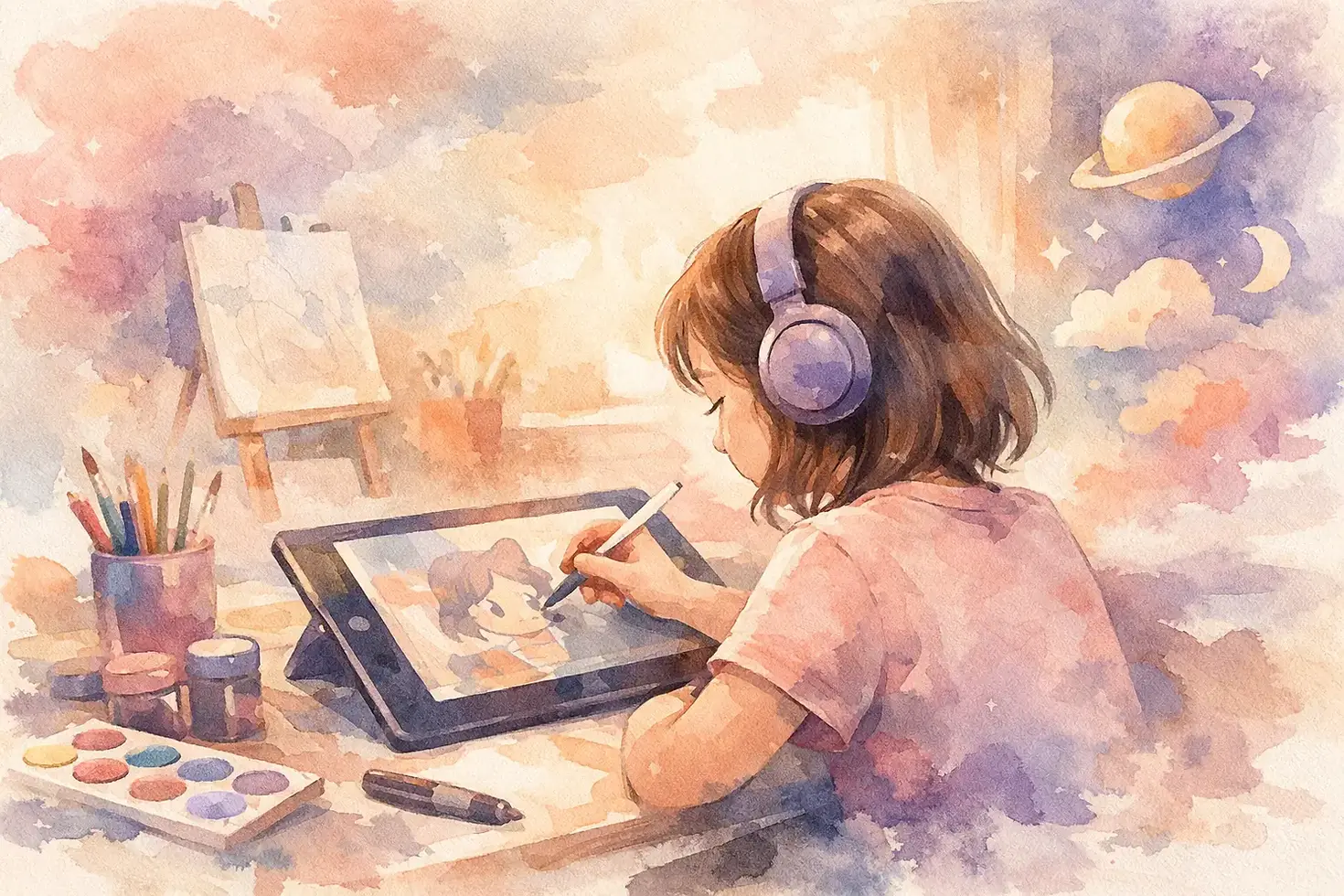
A Guide to Digital Drawing for Preteens

A stylus slips, the line goes crooked, and suddenly a preteen decides they are "bad at digital art." That moment happens fast, especially when kids compare their first sketches to polished artwork they see online. A strong guide to digital drawing for preteens should do the opposite - it should make the learning process feel clear, manageable, and rewarding from the very beginning.
Digital drawing can be an excellent fit for preteens because it combines creativity with structure. Young artists can experiment with color, fix mistakes without starting over, and build confidence through repeated practice. At the same time, digital art still requires real fundamentals. Good drawing on a screen depends on the same visual skills as good drawing on paper: observation, proportion, shading, composition, and patience.
Why digital drawing works well for preteens
Preteens are at an ideal stage for digital art instruction. They are old enough to follow a sequence of technical steps, but still open and playful enough to explore without overthinking every mark. That combination matters. When students are guided well, digital drawing becomes more than screen time - it becomes focused, skill-building studio time.
There are practical advantages too. Digital tools let students test brushes, layers, and color palettes quickly, which keeps momentum strong. If a child is nervous about making mistakes, the undo button can reduce pressure. If a child tends to rush, digital tools can actually help slow them down by introducing processes such as sketching on one layer, refining on another, and adding color in stages.
That said, digital drawing is not automatically easier than traditional drawing. In some ways, it is harder at first. Drawing on a slippery screen or tablet surface feels different from pencil on paper, and many beginners get distracted by effects before they build core skills. This is where structure makes a real difference.
What preteens actually need to get started
Parents often assume digital drawing requires expensive equipment from day one. Sometimes it does, but often it does not. A beginner can start successfully with a modest setup if the focus stays on learning rather than collecting gear.
The most important tools are a device that can run a drawing app, a stylus that feels comfortable, and software that is simple enough for a beginner to understand. A basic tablet with a responsive stylus is often a better starting point than a complicated professional setup. For preteens, ease of use matters more than advanced features.
A good beginner app should include layers, brush control, erasing, and a straightforward color picker. Too many menus can overwhelm a younger student. It is better to learn a few essential functions well than to click through dozens of tools without purpose.
Parents should also think about posture, hand comfort, and workspace. A child hunched over a couch cushion may lose focus quickly. A stable table, proper seating, and regular breaks support better drawing habits and help preteens treat art as a real practice.
A practical guide to digital drawing for preteens
The most successful young digital artists usually do not begin with fully rendered characters or dramatic fantasy scenes. They begin with control. Before a student can create polished artwork, they need to learn how to place lines, simplify shapes, and observe details carefully.
Start with line exercises. Straight lines, curved lines, circles, and simple shapes may sound basic, but they train hand control and confidence. Digital drawing can feel awkward at first, so these repetitions matter. They are not busywork. They are groundwork.
Next, move into shape-based drawing. Preteens should learn to build objects from circles, rectangles, and triangles before chasing details. A cartoon face, an animal, or a simple room scene all become easier when students understand construction. This also prevents a common beginner habit: drawing outlines without understanding form.
Once shape construction feels comfortable, introduce layers. This is one of the biggest advantages of digital art, and preteens should learn it early. A rough sketch can sit on one layer, cleaner linework on another, and color below both. This teaches organization, problem-solving, and revision - three habits that support growth in every medium.
Color should come after drawing basics, not before. Many preteens are eager to jump straight into bright effects, but strong color choices depend on clear forms and readable composition. A student who can draw a simple character clearly in black and white is better prepared to use color well.
The skills that matter more than special effects
When parents look at digital art, it is easy to notice brushes, glow effects, or dramatic textures. Those can be exciting, but they are not what build a young artist. Real progress comes from fundamentals practiced consistently.
Observation is one of the most important. Can the student look carefully at a reference and notice angles, proportions, and relationships between shapes? Patience is another. Can they revise a sketch instead of quitting when it looks imperfect? Visual decision-making also matters. Can they choose where the viewer should look first, and can they keep the page organized rather than crowded?
These are the skills that create long-term growth. They help a preteen succeed not only in digital drawing, but also in sketching, painting, design, and later portfolio development. At Expression8 Art Academy, this kind of structured progression is what helps students move from interest to real ability.
How often preteens should practice
Consistency matters more than marathon sessions. A preteen who draws three or four times a week for 30 minutes will usually improve more steadily than one who draws for three hours once every two weeks. Short, focused practice is easier to sustain and easier to build into family schedules.
It also helps to give each practice session a purpose. One day might focus on line control, another on facial features, another on coloring a simple object with light and shadow. Random practice can still be enjoyable, but targeted practice leads to visible progress faster. That visible progress is what keeps many students motivated.
Parents should expect uneven results. A child may draw one piece that looks advanced and then struggle the next day with something simpler. That is normal. Skill development is rarely linear, especially in the preteen years when confidence can rise and fall quickly.
Common mistakes to watch for
One common mistake is letting preteens rely too heavily on undo. Used wisely, undo supports experimentation. Used constantly, it can interrupt learning. Students need time to look at a line, decide what is off, and try correcting it with intention.
Another mistake is focusing only on finished pieces. Finished artwork is satisfying, but studies are just as valuable. Quick sketches of hands, objects, expressions, or clothing folds often teach more than one polished drawing completed with guesswork.
Comparison is another challenge. Many preteens see advanced artists online and assume they should be producing similar results immediately. Parents and teachers can help by redirecting attention toward improvement, not perfection. The right question is not, "Is this professional quality?" It is, "What is stronger than last month?"
Finally, some students hop from app to app or style to style before learning any one process well. Exploration is healthy, but too much switching can slow progress. A stable routine with one main tool and a clear sequence of skills usually works better.
When guided instruction makes the biggest difference
Some preteens are highly self-motivated and do well with tutorials for a while. Others need live feedback, structure, and accountability almost immediately. Neither approach is wrong, but there is a point where personalized instruction becomes especially valuable.
If a student is repeating the same drawing mistakes, losing confidence, or becoming more interested in shortcuts than in skill-building, guided classes can help. Strong instruction provides sequence. It teaches what to learn first, what to practice next, and how to correct problems before they become habits.
For families, this matters because progress is easier to see when learning is organized. A structured program can help preteens develop digital technique while also strengthening artistic discipline, creative confidence, and readiness for more advanced study later on.
Helping preteens enjoy the process and grow from it
Digital drawing should feel exciting, but it should also feel purposeful. The best experience for a preteen is not just making a cool picture once. It is realizing, step by step, that they can improve through practice, guidance, and effort.
That mindset stays with students. It shapes how they approach challenges, how they respond to feedback, and how seriously they take their own creative goals. Whether a child wants a fun artistic outlet or a stronger foundation for future portfolio work, digital drawing can be a meaningful starting point when it is taught with both encouragement and high standards.
A screen can become a real studio when a young artist has the right tools, the right expectations, and the right support.


Comments